How TROPIC discovered that ambassador advocacy and brand building work best together.
- Client TROPIC SKINCARE
- Scope BRAND STRATEGY
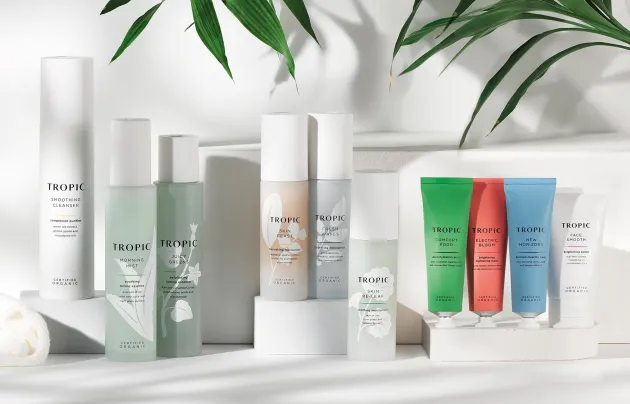
TROPIC skincare is one of Britain's most impressive beauty success stories. Built by founder Susie Ma and a passionate community of ambassadors, it has grown almost entirely through recommendation and word-of-mouth rather than traditional advertising.
But every referral model has a natural limit.
As ambassador recruitment began to plateau, TROPIC wanted to understand where future growth would come from. Could the business continue relying on word of mouth, or was it time to build broader consumer demand?
That's where Pull London came in.
THE CHALLENGE
Few beauty brands have grown quite like TROPIC Skincare did.
At just 15 years old, founder Susie Ma began making skincare products on her mother's kitchen table before selling them at Greenwich Market. Following her appearance on The Apprentice, Lord Sugar invested in the business, helping accelerate its growth. Today, TROPIC has become one of the UK's leading independent skincare brands.
Its success has been driven by an unusually engaged ambassador network.
Unlike many direct-selling models, TROPIC's ambassadors are genuine enthusiasts who believe in both the products and the founder. They have created an extraordinary word-of-mouth engine.
But how far could the ambassador model take the brand?
If ambassador recruitment eventually slowed, could TROPIC continue growing? Or would that growth have to come from creating a pull in other channels?
OUR APPROACH
Pull designed and delivered TROPIC's first consumer research programme to answer four key questions:
- Who actually buys TROPIC skincare?
- How does the brand compare with its competitors?
- What role do ambassadors really play in the customer journey?
- Where should the brand position itself for future growth?
The findings formed the basis of Pull's Brand Blueprint™ and recommendations on the brand's 4Ps: positioning, proposition, personality and purpose.
What we discovered
Buyers were older than expected
Firstly that TROPIC’s customers were older on average than our client expected. This is not of itself a bad thing! In Pull’s own Future of Beauty research programme – Gen X The Invisible Generation – older beauty consumers outspend all other generations. The issue is – you need to know who is buying your brand.
To be honest we were less surprised than our client about the average age of brand buyers. Why? Well because we have yet to do consumer research for a skincare brand where we found the average age of their buyer isn't older than the client thinks. All the more reason to find out and track. Otherwise, you won’t know if your buyers are actually getting older on average – if they are – you need a plan!
Product experience mattered most
After efficacy – consumers loved TROPIC because the products felt fresh, natural and indulgent.
The sensory experience—particularly freshness, fragrance and natural ingredients—was the strongest driver of purchase.
Interestingly, sustainability and ethical credentials also performed exceptionally well. Unlike many brands where environmental messaging seems like an afterthought, TROPIC's customers genuinely valued the brand's social purpose, sustainability and environmental initiatives. Much of that credibility stemmed from Susie Ma herself, her involvement in those initiatives and the authenticity she brought to the business.
Ambassadors created genuine trust
Direct-selling businesses are often misunderstood.
We have heard the remark about MLM (multi-level marketing) so many times within in the beauty business. Often in rather derogatory terms: “isn’t it pyramid-selling?”
With TROPIC it was obvious that as well as the ambassadors being highly committed and motivated, brand buyers generally enthusiastically embraced the ambassador model and trusted ambassadors.
There wasn't really an "ambassador customer"
One of the most interesting findings challenged our assumptions.
Customers didn't neatly divide into "ambassador customers" and "website customers."
Instead, ambassadors were overwhelmingly responsible for discovery.
Once consumers knew and trusted the brand, they replenished wherever it was most convenient—sometimes through ambassadors, sometimes directly through the TROPIC website.
The strategic insight
TROPIC had built an exceptional word-of-mouth business. But ultimately, you literally run out of mouths for continued growth.
The research suggested that future success would come from combining two powerful forces:
- continuing to invest in ambassador advocacy
- building broader brand awareness through consumer marketing
These approaches aren't alternatives—they reinforce each other.
Greater brand awareness makes ambassadors more effective, improves conversion, strengthens customer confidence and makes recruiting new ambassadors easier.
Push and pull are not mutually exclusive. All our research around skincare has shown that the brands that grow have a significant word-of-mouth effect in the early stages of growth. People talk about formulations they love and seem to work well for them.
Celebrities and other influencers can of course accelerate that effect, but ultimately, brands need advertising to increase familiarity and improve likeability (we like what we know) and performance marketing responses.
What other brands can learn from this
1. Passionate communities are incredibly powerful—but they have limits
Referral and ambassador programmes can create remarkable growth, but every recommendation model eventually reaches a ceiling.
2. Know who really buys your brand
Internal assumptions are often wrong.
Regular consumer research reveals who your customers actually are, how they think, and how your market is changing.
3. Brand building makes every channel work harder
Brand awareness doesn't replace direct selling or performance marketing.
It makes both significantly more effective.
4. Build demand before growth slows
The best time to invest in brand awareness isn't after growth has stalled—it's while the business is still growing.
Looking beyond word of mouth
TROPIC demonstrates just how powerful authentic advocacy can be.
It also illustrates an important lesson for ambitious brands: sustainable long-term growth usually requires both enthusiastic advocates and strong consumer demand.
Word of mouth built the business.
Brand building can help write its next chapter.
If you're a founder-led beauty brand looking to build a stronger, evidence-based brand strategy, contact us, we'd love to talk.