How Pull helped premium skincare brand Zelens understand its future customer
- Client Zelens
- Scope CONSUMER RESEARCH \ BRAND STRATEGY
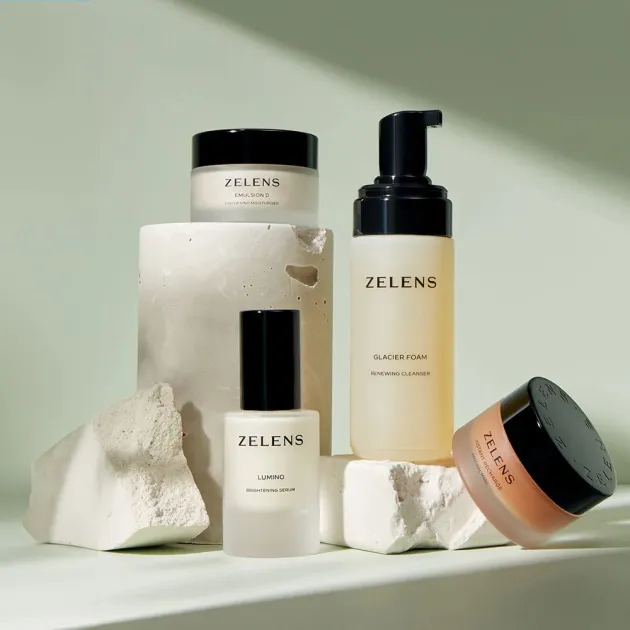
Zelens is a science-led luxury skincare brand with a loyal customer base and an enviable reputation for product performance.
However, our research for them suggested an important strategic challenge.
The brand's core customer was affluent, knowledgeable and exceptionally loyal—but on average - she was also getting older.
So we set out to find out who Zelens should be targeting and whether they should be aiming to reduce or at least stabilise the average age of their brand user (a common theme for Pull clients.)
While we would urge caution about making assumptions about age cohorts, we knew from our research that attitudes to skincare change significantly as users age.
By combining multiple research insights from different projects and research we sponsored ouselves, Pull uncovered an important insight about a change-over point in attitudes as Millennials skincare users ‘come of age’: Their mindset moves from: ‘whatever routine and ingredients fix my skin’ and more interest in cosmetics to: ‘I need to do the right thing for my skin in the long term.
The challenge
Zelens appealed to a ‘serious' older consumer because of its fabled scientist and doctor founder Marko Lens and the brand’s scientific formulas and efficacy. Could Zelens also appeal to younger premium skincare consumers? If so, who were they?
Our approach
We conducted in-depth qualitative interviews with:
- Existing Zelens customers
- Millennial skincare consumers

What we discovered
1. Millennials had a fundamentally different attitude to skincare than Gen Z.
Consumers in their 30s described a clear shift from buying cosmetics towards investing in skincare.
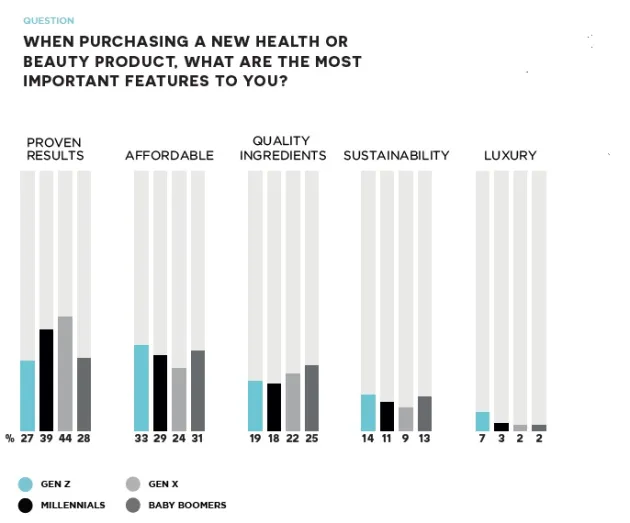
This attitude-setting change occurred at around the age of 30, meaning that how Millennials looked at skincare was more closely aligned with how Gen X and Baby Boomers did (46+).
Rather than trying to find powerful fixes or look younger, they wanted to look healthier and maintain good skin over time.
They were becoming more knowledgeable, reading ingredients and paying much closer attention to product quality.
2. Science mattered—but only when it remained understandable
Skincare buyers generally aren't impressed with too much science.
They want reassurance that products are scientifically formulated and genuinely effective, while still being able to relate to the benefits themselves.
Most described themselves as knowledgeable rather than experts, making education an opportunity rather than a barrier.
3. Luxury isn’t defined by price
We explored the idea of ‘luxury’ in skincare with consumers. It seems likely that the terms premium or luxury are not used in a clear cut way in this category.
What we have learnt over time is that consumers are not typically explicitly looking for luxury skincare (La Mer, the only brand regularly spontaneously mentioned regularly by consumers as luxury, conspicuously don’t use the term themselves). But consumers are more likely to use it in connection with a sensorial aspect of using a product – like its scent or texture than as an expectation based on a high price.
4. The biggest opportunity sat between science and nature
Perhaps the most valuable insight was that consumers didn't see science and natural ingredients as opposing ideas.
Instead they wanted both.
Scientific proof creates confidence. Proven results are the number one for consumers.
Being as natural as possible – and preferably with some sustainability claims makes people feel good about their purchase.
The most compelling proposition for a premium skincare product seems to be rigorous science with naturally-derived ingredients rather than assuming that consumers leant in one direction or the other.
5. Advice builds loyalty
Consumers increasingly expected premium skincare brands to behave like trusted advisers.
They welcome practical guidance, ongoing education and personalised communication rather than constant selling.
For premium brands, expertise has become a relationship benefit rather than simply a product attribute.
The strategic outcome
Zelens came to us asking if they should reposition the brand. We believe that too many brands reposition or rebrand when they should really continually evolve. We always discover that beauty brands appeal to a much wider age-range than their owners think. So the question should never be about finding an ultra-loyal niche, but typically be asking: how can I make my brand appeal to the widest group possible?
Instead, the opportunity was to evolve how the brand communicated.
Rather than becoming younger or trendier, a premium skincare brand can:
- make its scientific expertise more accessible
- balance science-based efficacy with naturally-derived ingredients
- educate rather than simply advertise
- build authority through trusted advice
- maintain premium positioning while broadening appeal
here is tension there is scope for creativity. And creativity can be used to create brand metaphors and powerful new copy.
By combining behavioural data with deep consumer conversations, we helped Zelens understand not only who its future customer could be—but why she would choose the brand.
What this demonstrates
So many brands that Pull has worked with have been founded by an inspired and inspiring founder as a matter of belief and conviction. But there comes a time when instinct and intuition should be supplemented with evidence – evidence about who is buying their brand and why. And using this knowledge to shape product development and brand identity and messaging. There will always be surprises and new insights and we unfailingly uncover strategic tensions in small brands. Those tensions can be put to work to shape future growth.
Where there is tension there is scope for creativity. And creativity can be used to sharpen identity, create brand metaphors and powerful new copy.
By combining behavioural data with deep consumer conversations, we helped Zelens understand not only who its future customer should be—but why she would choose the brand.