
LUXURY BRAND MARKETING - 2
Marketing luxury brands - what's different?
In this second of three articles we are going to look at what’s different in luxury brand marketing.
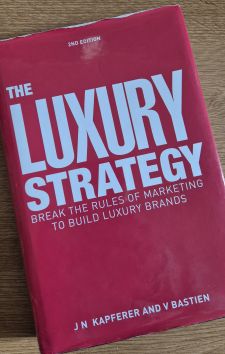
All three articles are based on the seminal work on Luxury Brand Management – ‘The Luxury Strategy’ by JN Kapferer and V Bastein.
Now this is weighty tome - a 400 page hardback - and the authors are French academics and luxury marketing practitioners. So in my articles there is going to be an element of “I read this so you don’t have to.”
My aim will be to cover the three things in three articles that have intrigued me since I started working at the classical brand management house of Procter & Gamble.
2. What’s different in luxury brand marketing?
3. What can managers of non-luxury products learn from the rules of luxury branding?
SO WHAT’S DIFFERENT IN LUXURY BRAND MARKETING?
Well quite a lot it turns out. It is probably fair to say that if you cut your teeth like I did at a conventional CPG house of brands, that most of the rules you learnt don’t really apply. No wonder luxury brand owners are wary of putting even well-trained and qualified conventional marketers on their teams.
However, I would say that a there is no reason that a conventional marketer couldn’t adapt their game once they know the rules. So let’s dive in.
The authors of TLS (The Luxury Strategy) talk of ‘Anti-laws’ These are generally not doing the things that are normally done in promoting brands.
“Creating demand and 'understanding your target' don’t apply. You are not solving consumer's problems. You are inventing the dreams of the elite”
THE ANTI-LAWS
1. Luxury brands can’t be 'Positioned'
Although debated by some marketing academics as to whether it is really a ‘thing’ (one for another Substack), Positioning is in our view the art of juxtaposition. Products are placed in what is perceived to be a gap in the market or in opposition to their competitor: e.g. the 'Youthful' positioning of Pepsi vs. the establishment – Coca Cola.
Luxury doesn’t need this approach because the brand should be unique. Its identity needs to give the brand a powerful feeling of uniqueness, timelessness.
Luxury must be 'superlative' not 'comparative' - faithful to its identity rather than worrying where it stands in comparison to a competitor. (This is well-illustrated by the Lexus-Porsche comparison in article 1. There’s only one Porsche, Lexus first product by comparison was based on copying a Mercedes).
Someone who cannot decide to buy a Porsche or a Ferrari shows themselves worthy of neither. Trying to compare them is to show the degree to which you are uncultured. An object needs to be learned to be appreciated. Lexus first US product offered a comparable car to a Mercedes E-class for a lower price.
2. Don’t seek wide appeal. Indifference is bad. Look for lovers and haters. Successful fragrances have been launched that were disliked by the majority, but adored by a minority.
3. Luxury products can be flawed. Most luxury watches have mechanical automatic movements. These are less accurate than electronic watches and need maintenance. By rational analysis they are inferior at doing the job of telling the time. (This suggest of course that the main job of a luxury watch is not to tell the time).
4. R&D mustn’t be consumer research-led. Creating demand and 'understanding your target' don’t apply. You are not solving consumer's problems. You are inventing the dreams of the elite. CPG brands from the likes of P&G are obsessed with listening and responding to consumers. You are leading your customers not being led by them. Luxury brands on the other hand can be born out of having a vision. One that contradicts the views of consumers. This leads to rule #5.
5. Ignore the majority. 80-99% of the population will not be buying your brand so ignore what they think.
6. Restrict Production. A luxury brand must have far more people who dream of buying it than can buy it.
7. Dominate the client. This seems a strange one on the face of it. The concept could be exemplified by ‘Don’t be too chummy’. Many mainstream brands will go out of their way to appear friendly and accessible and cultivate a sympathetic tone of voice. Luxury brands shouldn’t do that but instead should maintain an aura of mystery and expect respect.
8. Make your brand difficult to buy. Another very counter-intuitive one for most conventional marketers. Especially those who have invested heavily in ecommerce UX and CRO. But luxury brands should create the sense that the brand needs to be earned. So waiting lists are normal for luxury brands. Inaccessibility breeds desire – so make people wait.
9. Remain elitist. Luxury brands must be ‘segregationist' and forget society's democratic principles. Treat your best buyers differently. Airlines keep first class passengers away from the hoi polloi – even if the hoi polloi are their hoi polloi.
10. Never sell. Perhaps the most counter-intuitive of all rules for marketers. The 60:40 rule of the Long & the Short of it* becomes 100:0. It’s all about long-term brand-building, never about sales or ‘activations’.
11. But communicate to the masses. To be aspirational, lots more people must want your brand than can buy it. Thus they need to know about it. I pointed out in a previous article that Rolex don’t advertise at F1 Grands Prix to sell watches. They do it 1. To ensure that Rolex owners feel good about the brand and 2. To ensure a mass audience who can’t afford one know about the brand. 1. doesn’t work without 2.
12. If possible, the perceived price should be higher than the actual price. Especially where the product is gifted.
13. Price should be ‘what you can get away with’ not set by the market, competition or cost-plus accounting.
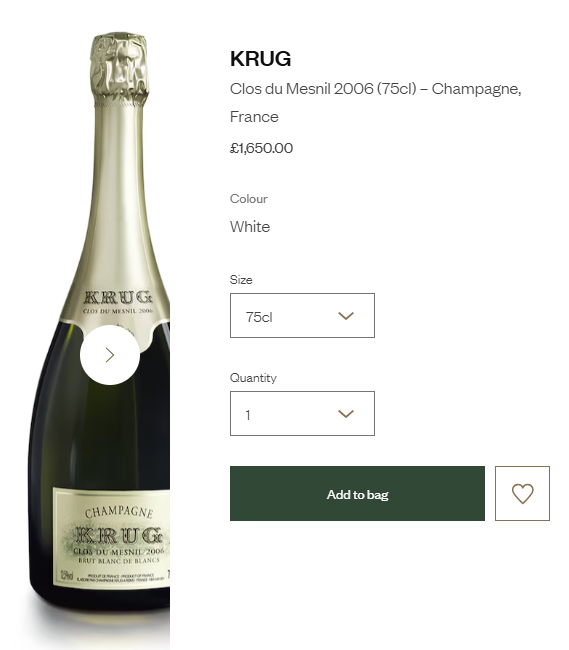
14. Leapfrog luxury leapfrogers. When Moet & Chandon leapfrogged Krug with a $100 Dom Perignon, Krug hit back by creating a special reserve 'Clos du Mesnil' - for $800 (now considerably more expensive).
15. Keep raising the ASP of your product. Keep a significant distance from mere 'upper premium' to emphasise the difference – especially for your brand buyers who will demand it.
16. Let the stars come to you. Celebrity influencers etc. should be considered very carefully. They should want to be seen with your brand rather than vice versa. It should be known that they chose your brand not the other way round.
17. Avoid manufacturing in low-cost regions. It can undermine brand values and image.
18. Group synergies must never undermine brand integrity. Value can’t come from cost reduction. When Ford bought Aston Martin, Land Rover, Jaguar and Volvo they called the new division the Premier Automotive Group. However, most of the strategy was industrial in terms of looking for platform and part sharing rather than brand-building. These brands were later sold by Ford at a loss. Witness by contrast the way the Mini brand (which we will cover in part 3.) was developed after being acquired by BMW.
19. Selective distribution. Worthy of an article in its own right and under siege from all directions with for instance the arrival of Amazon Luxury, this principal still holds for grade 1 luxury brands who distributed selectively and use retail locations to add prestige and provide service.
* The Long and the Short of It by Les Binet and Peter Field
THE LAWS
1. Brands must have history and a story. If there is none, they must be invented. The founder of Ralph Lauren Ralph Lifschitz borrowed a lifestyle that he never experienced. He borrowed from the mythology of wealthy New Englanders in the first half of the 20th century with the accoutrements of cars, houses, pastimes – like Polo.

Gucci hints at a noble origin, linked to a great Renaissance family. Then there is Häagen Dazs, created by two Polish emigrees in New York to sound as authentically Scandinavian as possible. There is no luxury brand without storytelling.
“We like to tell stories that are perceived as authentic, somewhat secret, and capable of transmitting an implicit message, loaded with collective values."
2. Time. Great brands have a dimension of time to them. Fine Cognac and Whiskey maturing in barrels. The time to make a great timepiece. The waiting list for a Ferrari. Hence brand museums. For all this need for time and history, a brand must avoid representing nothing but 'tradition'. It must have a relationship with today's world and find ways to re-express itself.
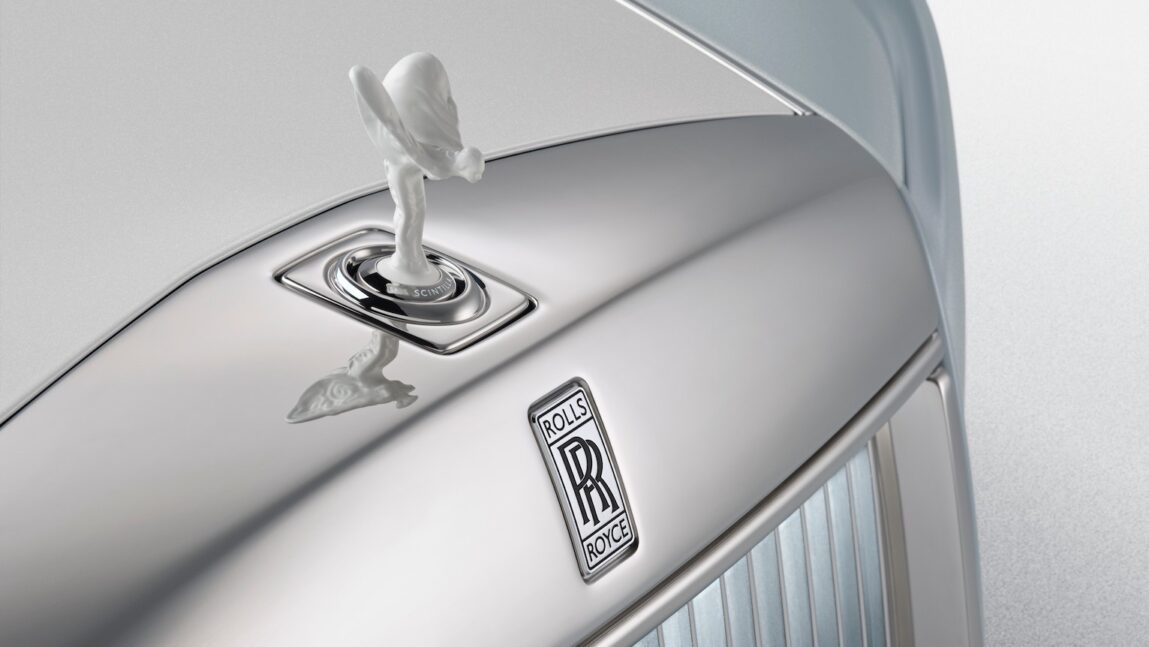
3. Luxury is made by hand. Not necessarily entirely by hand. People would generally reject the idea of a car built entirely by hand and without the precision that some automation and robotics only can provide. But if they buy a luxury car like a Rolls Royce they will know that elements like the grill are hand-crafted unlike with a mass-produced car.
4. Rarity. In the past, rarity has been seen as essential to luxury. This appears to have changed to a large degree – at least in some categories. This may be driven by what seems to be the almost insatiable demand coming from developing markets like China, but also Japan. "The fact that Japanese 'office ladies' all carry the same Louis Vuitton handbags does not worry them – on the contrary. In Japan, luxury is a luxury of integration: too much rarity would therefore destroy the brand's value."

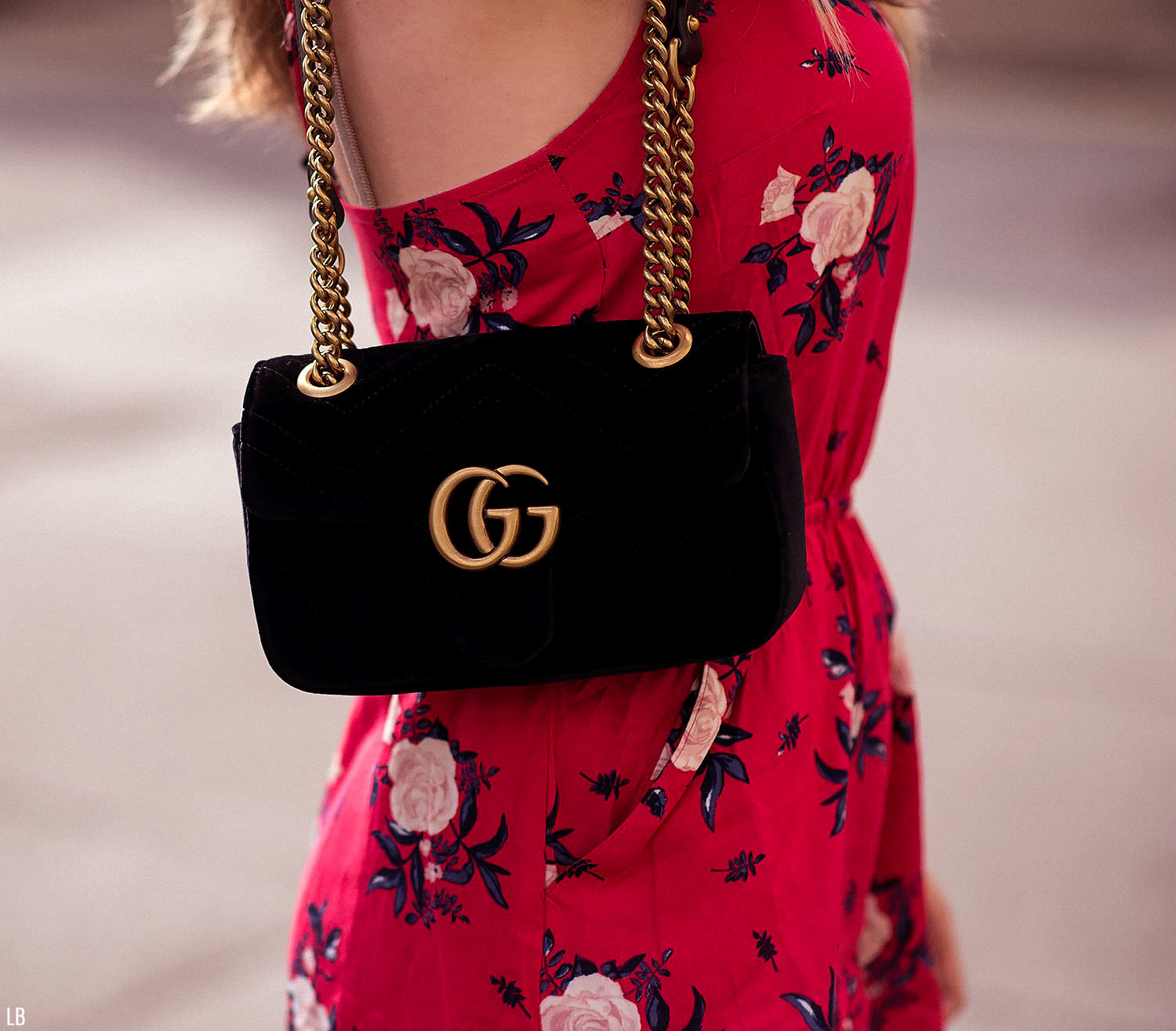
5. Use of logos. The smaller and cheaper the product in a range – the larger the logo.
Lastly, let’s look at some of the rules for communicating luxury.
COMMUNICATING LUXURY
"In luxury, you communicate in order to create the dream and to recharge the brand's value, not in order to sell."
Necessary elements of luxury brand communication
- Never link with levels of sales
- Refined and artistic communication
- Don’t test
- Speaks to existing clients
- Longevity of the campaign
- Don't talk about price, discounting or savings
- Don’t talk about your own financial results (unless of course where you have to)
- Involve, don't advertise (excusive events etc.)
- Create a brand universe – not just pack-shots
- Make sure your brand is talked about
- Encourage word-of-mouth
So what is the conventional brand manager not familiar with marketing luxury brands make of all of this? My take would be as follows:
Firstly, if you are managing a luxury brand you are probably in a very fortuitous position compared to your peers in CPG or conventional marketing. Firstly, you have none of the pressure of driving immediate rather than future demand, arguably the bane of most marketers lives. Everything is done for the long term. The bustle and clamour of the bazaar is not for you. In many ways, arguably a luxury brand has arrived in the position where all brands should be aiming for. One where the brand is so strong its mental availability and margins are enough to be a bulwark against competition, price pressure and poor physical availability.
On the other hand, you could say that the jeopardy in managing a luxury brand makes up for the plus-side. Missteps with luxury brands are punished hard. Mis-managed distribution and failing to deal with counterfeiting can be terminal. Over-stretching the brand, brand extensions and spin-offs especially have brought big luxury brands off their thrones, and getting back can be considered almost impossible. The most common fall from grace for a luxury brand is to move into what is really ‘just fashion’. This appears to have been the fate of British brand Burberry. Their apparent downfall is complex, but seems to have involved a series of luxury brand management missteps including a disconnect from its history and heritage, over-reliance on the Chinese market, price-cutting and discounting.
‘Leaving’ luxury on the other hand might be a positive move if managed well. Although the distinction between them is tight, Mercedes more than BMW have chosen to cover a wider range of price points where the brand is blurred between mass-market at one end and luxury at the other. As a result research seems to show that in most markets, more consumers perceive BMW as a luxury brand now than they consider Mercedes to be one.
Posted 17 March 2026 by Chris Bullick