
Why all the principles of B2C Branding apply to B2B brands
Why do people think brand matters less in B2B? All the research shows that the same principles apply – just more so
I can forgive people talking about B2B marketing as though it’s different. The actual art of identifying, reaching and talking to your B2B targets can be specialised (although doing those things are arguably sales rather than marketing – just like performance marketing is). But in what way are the principles of branding different for B2B than B2C? I would argue - not at all. There are however some subtle differences worth knowing – so we will get into them too.
So here I hope is some practical advice for less than huge B2B brands based on practical experience in creating both B2C & B2B brands.
Perhaps it is because many B2B brand owners are actually closer to their customers and regularly meet and manage customers, that distracts some from thinking too much about their brand. But I see so many B2B brands where it really feels like the business could not have got it more wrong if they had employed someone to truly f**k their brand up for them.
Surely even the most disinterested B2B brand owner would agree that their brand should be:
1. Easy to find
2. Easy to recognize
3. Easy to remember
Getting the basics as good as they can be
This is where it can start to go wrong – at the beginning. I think many B2B founders think – “Well I’m not trying to create something that needs to just trip of consumer’s tongues. I’m not going on TV with it.” OK, but that’s probably all the more reason to get your brand basics right.
As I covered in Four things you have to get right for your brand:
“Yes, we see brands with no name. Now I know what you are thinking: “How can you have a brand and not know what its name is?” You won’t believe how often this happens. We have experienced several scenarios, including brands with sales over £100m, where there are significant un-resolved brand name/URL issues that generate ongoing problems, constantly under discussion but unresolved. In some cases even the brand name as used by the business itself is ambiguous. These issues sap time and energy from the companies in question, and cost money in terms of getting in the way of ongoing brand communication.
"How could they not have a brand name? Well to protect the (not so) innocent I am going to invent a brand name as it covers a few scenarios we have met. Imagine a brand called – say – ‘Red Sky’. Despite turning over millions, the business refers to itself as: Red Sky, RedSky, Red-Sky, Red-sky and Red Sky UK. That is in its own brand collateral.”
When I worked as NED at Gocycle, the founder spent years developing the highly innovative e-bike in his apartment, and created a business before he dreamt up the bike and the (pretty good) Gocycle brand name. The business name wasn’t bad either – Karbon Kinetics. But I had to work pretty hard to convince the founder to reduce the use of Karbon Kinetics - which was used quite widely alongside Gocycle - to the absolute legal minimum. This stark statement usually does it in those circumstances: “Do you really want 2 brands or 1? If you want 2 it will cost you twice as much.”
I go on to talk about the mechanics of brand naming in the same ‘Four Things’ article so I won’t cover that here. Suffice to say: Have a future-proof strategy for projecting and protecting your brand and its various derivatives for a long time (unlike their founders – brands should never die). On the one hand, the absolute penetration of your brand is likely to be small enough that you are not throwing away a lot of brand equity if you must change it. On the other, if you have worked hard to define your brand and done it right – don’t change it unless you absolutely have to (see below about longer time cycles in B2B). And one other comment on brand naming: Make sure no-one else will claim that you are infringing their trade name rights. Having to change brand name 2 years in, when your brand gets big enough for someone to object to it is both very damaging to a business, but surprisingly common.
B2B Buyers are making a more rational choice
Most marketers tend to think that. But there is evidence to show that emotion – generally recognised as playing a large part in consumer brands purchase – plays an even greater role in B2B purchases.
I think this can be misinterpreted, I’ll come on to say how, but for now consider this research done in partnership between Gartner & Google that led them to claim that:
- 70% of a B2B buyer’s decision-making process is influenced by the brand
- B2B buyers are 8x more likely to pay a premium for products that offer personal value*
(*i.e. they are perceived to offer them a lower level of risk.)
What I find interesting here is that researchers talk about emotion as though humans had only one (emotion). To go to the other extreme in terms of different emotions, Pull has done a lot of research of consumer motivations in skincare. Based on that experience I describe the category as the marketing torture test. If you can establish a new skincare brand you are undoubtedly a marketing genius. In this article I point to the need for emotional appeal in the health and beauty category - and its elusiveness.
“that difficult to pin down ‘Je ne sais qoui’ that is the life and soul of the brand.”
The emotion evoked by the beauty brands that have the correct vibe is one of attraction and affiliation. “I like the look and feel of this brand and know my friends will.” I think that the best B2B brands evoke a different emotion. It is a sense of security – probably most of all job security.
As the Gartner/Google research points out, with B2B it is often really about risk mitigation. B2B buyers are often motivated by fear:
- Losing time and effort if a purchase decision goes poorly
- Losing credibility if they make a recommendation for an unsuccessful purchase, and -
Losing their job if they are responsible for a failed purchase.
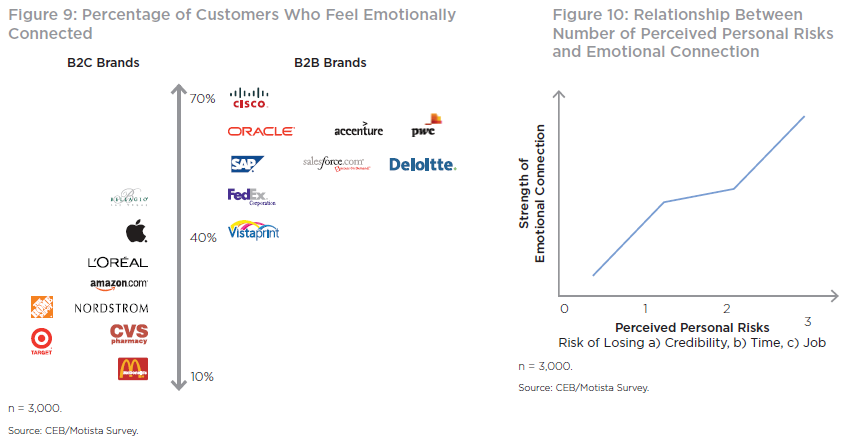
So why I described the findings on emotion in B2B as potentially a little misleading above is this. The chart suggests that buyers have stronger emotions about B2B brands than B2C brands. But we have to recognise the emotional response is also different. Of course these are all people (we talk about B2P in Pull). The reason they feel stronger about B2B brands is because the stakes are higher.
Advertising sage John Hegarty has something to say that is especially relevant for B2B. Talking about the queasiness CFOs and CEOs sometimes have about the abstractness of brand, he suggest telling them to substitute the word with ‘reputation’. I’ve met plenty of mid-size and smaller B2B brand owners who don’t seem to believe in brand. But they certainly understand the need for reputation.
The common denominator is familiarity
If I could persuade marketers of just one rule of marketing, it would be that research endlessly indicates that people prefer things they know. Regardless of everything else – all the 4 Ps of marketing: Product, Price, Place and Promotion - people are more likely to consider, purchase, and buy again a product they know.
So what are the actual differences between managing a B2B and a B2C brand?
The key thing to bear in mind is probably that B2B markets are ‘slower’ than consumer markets. The audiences are smaller, fewer products are launched and some buyers are harder to reach. Research by Binet & Field, Google, LinkedIn and McKinsey all came to this conclusion. It can take longer and even more investment to build a B2B brand.
I think that the take-out – even for B2B brand sceptics ought to be simply that there is even less reason to ignore the rules of brand-building for a B2B brand than for a consumer brand.
So what are the actual differences between managing a B2B and a B2C brand?
The key thing to bear in mind is probably that B2B markets are ‘slower’ than consumer markets. The audiences are smaller, fewer products are launched and some buyers are harder to reach. Research by Binet & Field, Google, LinkedIn and McKinsey all came to this conclusion. It can take longer and even more investment to build a B2B brand.
I think that the take-out – even for B2B brand sceptics ought to be simply that there is even less reason to ignore the rules of brand-building for a B2B brand than for a consumer brand.
Very probably, your communication is very rational. It is likely to include:
· Feature-led messaging
· Technical language
· No emotional narrative
· No brand personality
If you accept the arguments above, there is no excuse. So what’s our advice? The same as it would be for a B2C brand:
1. Identify your brand’s personality and from it -
2. Develop distinct brand assets and be as diligent about consistency as a B2C brand should be.
3. Have a narrative people can relate to
4. Talk like a human
5. If you are a new brand – as we have recommended before – make sure you invest at least 10% of your sales and marketing budget on brand building and aim for 70% as you grow. This might not be on TV advertising, but something that you know works in your sector, like sports sponsorship with the opportunity it brings for corporate hospitality.
Creating a distinct B2B brand
Vevox
When parent company Lumi Global wanted to spin off a polling and voting app, they asked Pull to develop a brand that became Vevox (originally Meetoo – but that is literally another story).
Auditing their competitors we discovered they relied on either stock photography or an illustrated iconography style. The major drawbacks with these approaches is the lack of distinct assets that fail to create an owned style and distinct brand.
Ipsos research shows that the second most distinct asset a brand can have is a brand character (after the stand-out of a sonic brand).
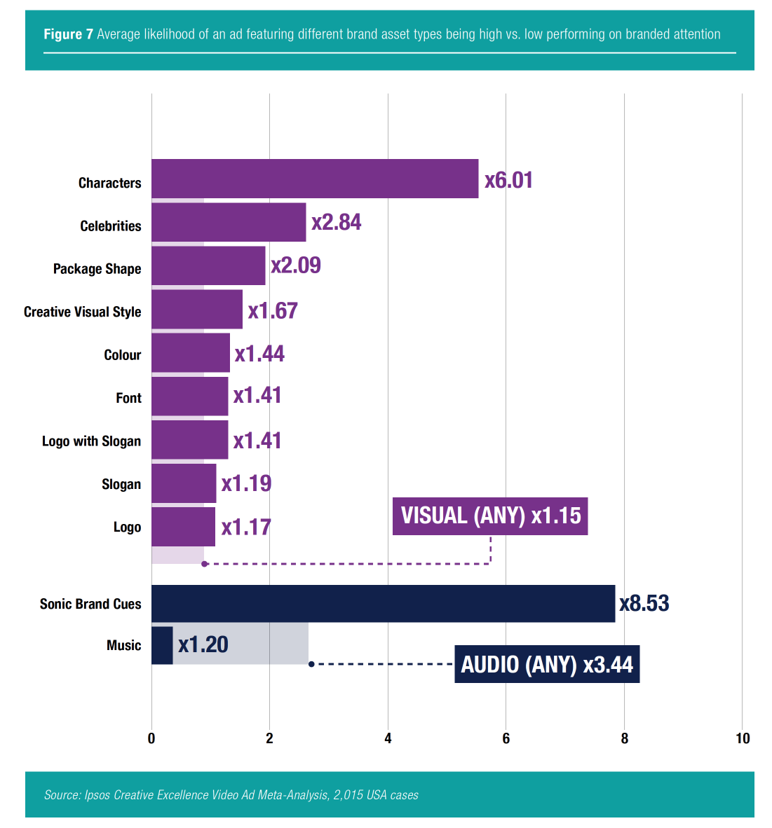
So we created a family of brand characters that can be used in unlimited ways to illustrate the brand. The benefit is an owned look. In addition, the endless challenge of finding a diverse set of human photography that will work in most geographies goes away. We also made these figures simple and quite one-dimensional in style which gives the client versatility to use them in marketing materials both as illustrations and even animations without constantly hiring expensive design resources.
What can you take away?
- Firstly, that being a B2B brand doesn’t take away from your responsibility to craft a well-constructed and distinct brand. Get it right from the beginning so you don’t have to revisit elements of your brand later – or even worse change your brand name.
- Promote your brand name, and don’t waste a penny promoting your business name.
- Emotion matters for B2B brands, just like it does for B2C. But the emotion is different. With B2C it could be described as ‘fondness through familiarity’, in B2B it is about the feeling of being on safe ground.
- Ultimately – the evidence shows that all the principles of B2C brand building apply to B2B – although even more so.
Posted 2 April 2026 by Chris Bullick