
DAVID BECKHAM, POUNDLAND AND THE ILLUSION OF LUXURY
What the curious case of David Beckham's fragrances tells us about celebrity, consumer behaviour and the difference between borrowing brand equity and building it.
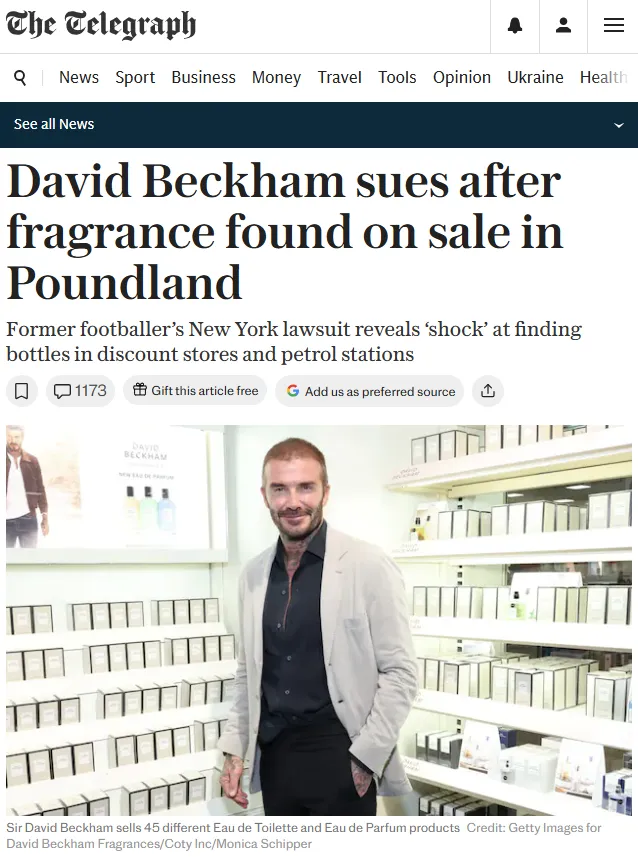
You may have picked up the headlines that David Beckham’s company is suing fragrance giant Coty, its licensing partner of over 20 years, for at least $41m. Amongst the allegations are that Beckham’s fragrances have found their way into Poundland and even a bargain bin in a petrol station.
As is the way with the media, the real story is not what it appears to be – its much more interesting. Especially to brand marketers.
The argument is that this unauthorised distribution is damaging the brand. Coty disputes the allegations.
It transpires that Beckham has already signed a new 20-year licensing deal with Interparfums, who will take over the fragrance business in April 2028. So there’s a clue there may be rather more to this story than meets the eye.
But what struck me was that Beckham’s company is behaving in the way you would expect the owner of a luxury fragrance brand to behave.
There is just one problem. David Beckham fragrances aren’t a luxury brand.
When was Eau de Beckham ever a luxury?
Beckham’s first fragrance, Instinct, was launched in 2005. A year later, The Independent reported that Superdrug alone had sold more than 50,000 bottles and was selling his next fragrance, Intimately Beckham, for just under £20.
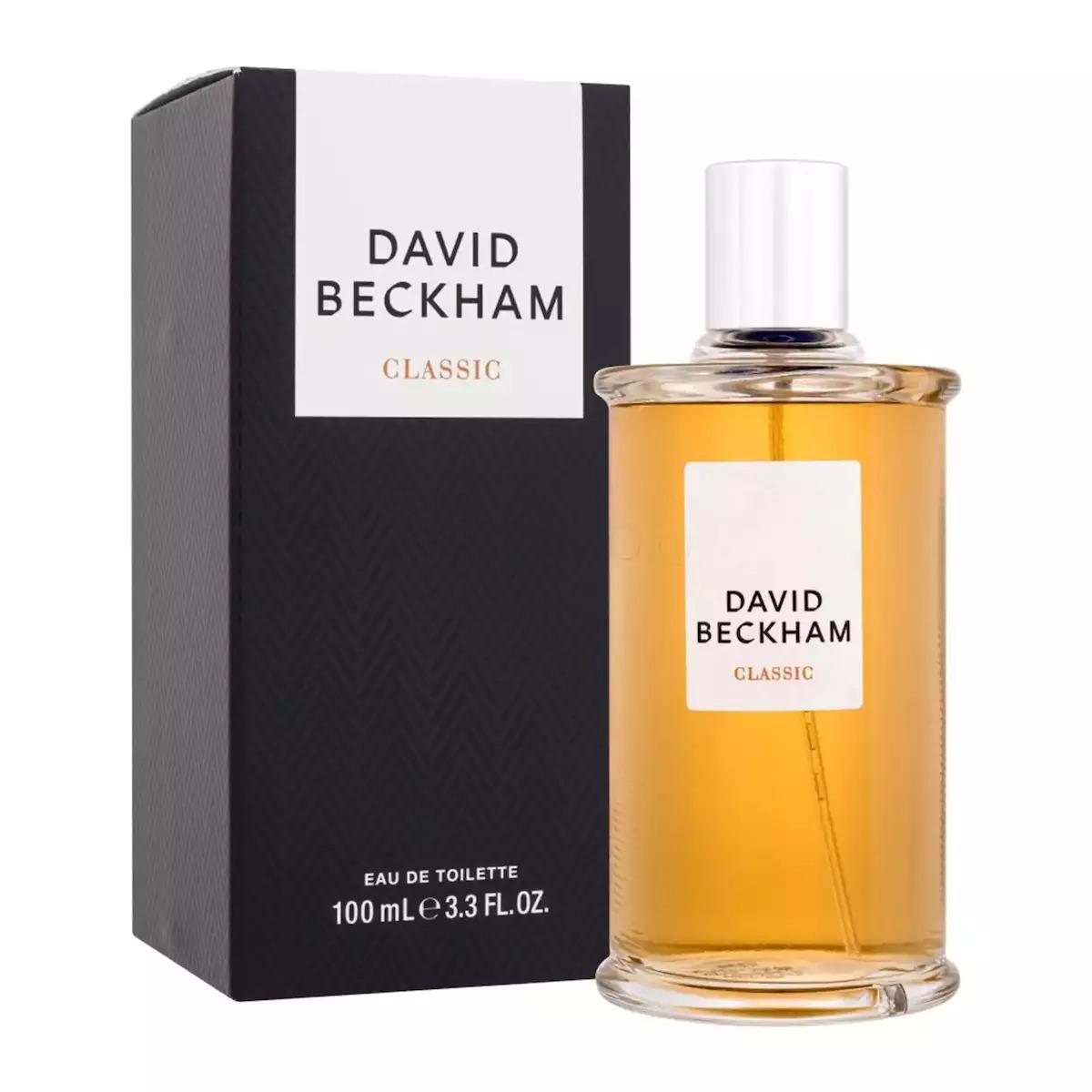
Twenty years later, you can still buy a bottle of Beckham fragrance for much the same sum (i.e. with inflation for a lot less). You can also buy any number of Beckham fragrance and shower gel gift sets for between £10 and £25.
Now there is absolutely nothing wrong with this. But jealously guarding who sells your product is luxury brand territory. Both under EU law and in practice.
Luxury brands are interesting in that some of the normal rules of brand marketing don’t apply. Most brands benefit from making themselves as easy to buy as possible. Luxury brands often derive some of their desirability from the very fact that they are not.
Where you can buy a luxury brand, how you buy it, and what you have to pay for it are all part of the brand proposition.
But Beckham has spent twenty years selling relatively inexpensive fragrances through mass-market retailers.
So what sort of brand equity that he is seeking to protect?
Who buys Eau de Beckham – and why?
I have a theory about Beckham fragrances. I don’t have the research to support the hypothesis, but there is some interesting evidence about the way we buy fragrances generally that I think gives you a very interesting potential insight into brand Beckham and how it actually works.
Research conducted by YouGov for Relish in 2023 found that 82% of fragrance owners aged 18–24 had received more than one fragrance as a gift. Circana research in 2024 found that 28% of consumers surveyed across five European countries had bought a fragrance as a gift in the previous six months.
Fragrance is a significant gifting category. And that means that, more often than in most categories, the purchaser and the consumer are not the same person.
Imagine you have a 19-year-old nephew for whom you need to buy a Christmas present. You think a fragrance might be a good idea.
The trouble is that a decent-sized bottle of one of the more desirable designer fragrances can now set you back £100 or more. You like your nephew, but perhaps not quite that much.
You could buy him a fragrance from a brand that neither you nor he has ever heard of. A bit risky. Or you could buy him one of the increasingly ubiquitous fragrance dupes. But what might that say about you as the giver?
And then you spot a rather nicely packaged David Beckham fragrance for £20.
Job done.
You have bought something with a name you know, and more importantly, a name you can be reasonably confident your nephew knows. It looks perfectly respectable and you haven’t broken the bank.
My hunch is that a significant part of the appeal of Beckham fragrances may have relatively little to do with men aspiring to brand David Beckham. It may have rather more to do with people buying presents for men.
The Beckham name is performing a valuable function. It is making an inexpensive fragrance feel like a respectable gift.
And if that is the case, perhaps there is a perfectly good reason why Beckham doesn’t want his fragrances appearing in Poundland. Not because it destroys the exclusivity of a luxury brand, but because it potentially undermines the very thing that makes an inexpensive fragrance gift-worthy.
A clever business model?
There is, of course, a potentially very positive aspect to all this for the Beckham fragrance business.
If the fragrance is half decent, a proportion of those nephews will actually like it. When the bottle runs out, some of them will go out and buy another one. Some may continue doing so for years. I could do that. I would never buy one, but if I was gifted it and really liked it I would swallow my pride and buy it (and weather the ridicule from my wife).
In effect, the gift purchaser has paid for the brand to get its product into the hands of a potential new customer who might never have considered buying it themselves.
Possibly more cost-effective than a retail sampling operation.
The Beckham name acquires the customer. The fragrance itself has the opportunity to keep them.
Reuters reported earlier this year that measured sales of Beckham fragrances had grown by an impressive 71.9% between 2023 and 2025, to $22.9m.
We don’t know what drove that growth. A single distribution (‘purchase availability’) deal that put the brand into several hundred airport shops, for instance, could have a dramatic effect on sales without any change whatsoever in consumer awareness of the brand' (‘mental availability’).
But there may well be a very sound mass-market business model here.
Which makes it all the more interesting that the brand owner appears so concerned about the sort of distribution that might help drive precisely that sort of growth.
Will anyone be buying Beckham fragrances in 2075?
Coco Chanel died in 1971. The fragrance that she commissioned from perfumer Ernest Beaux in 1921 – Chanel No. 5 – remains one of the most famous fragrances in the world.
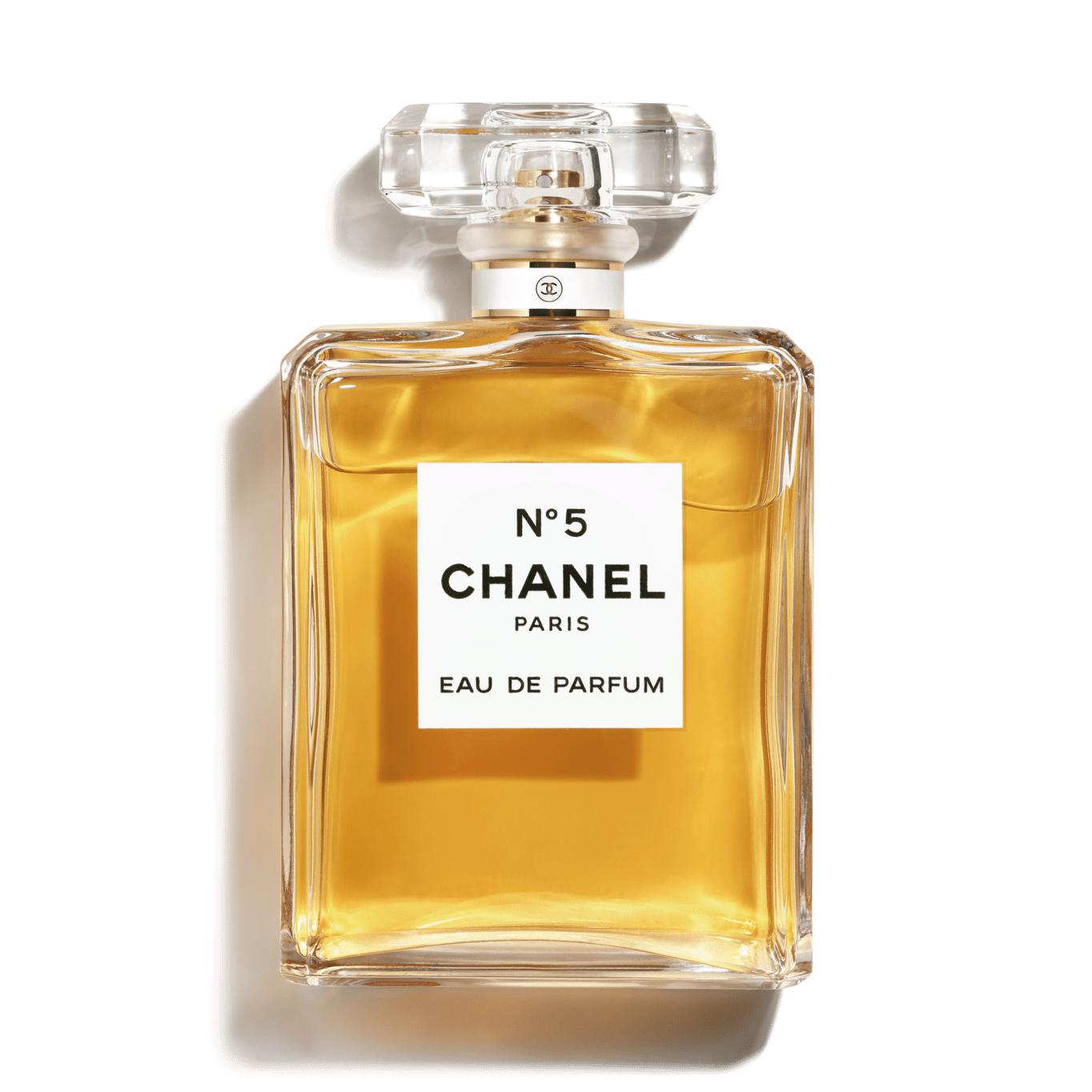
I suspect very few of its younger purchasers know much about Coco Chanel herself.
They don’t need to.
Chanel created a fashion house with a distinctive aesthetic, a philosophy and an identity of its own. Chanel No. 5 was an expression of that. Over more than a century, the fragrance has accumulated enormous brand equity in its own right.
Coco Chanel’s name became the name of an institution.
David Beckham was a very good footballer. He has subsequently proved to be an extraordinarily successful exponent of the commercial exploitation of celebrity. His personal brand has arguably become more prestigious since he stopped playing football.
But has he created a fragrance brand, or has he simply lent his name to a fragrance?
There is a big difference.
If my theory about gifting has any substance, Beckham fragrances may well have recruited a substantial number of perfectly happy customers who will continue to buy the product long after Beckham’s footballing exploits have faded from the public consciousness.
But retaining existing customers is one thing. Recruiting successive generations of new customers is another.
What happens when the aunt buying a Christmas present for her nephew no longer attaches any particular significance to the Beckham name? Or when she doubts that her nephew will?
The very mechanism that may have made the brand successful starts to break down.
Borrowing brand equity isn’t the same as building it
Celebrity licensing is a perfectly legitimate way of creating a brand. It allows you to take something that would otherwise require a great deal of time and money to create – familiarity and a set of desirable associations – and effectively rent it.
The challenge is what you do with that name over the long term.
Do you simply exploit those associations for as long as they have commercial value? Or do you use them as a platform from which to build a brand that eventually has meaning and desirability of its own?
For the owners of smaller brands, there is a useful lesson here too. Whether you are borrowing equity from a celebrity, a famous ingredient, a technology or the reputation of a retailer, you need to think about what equity you are accumulating in your own brand in the process.
Interparfums clearly believes there is considerable commercial potential in the Beckham name. It has signed a 20-year deal and expects annual sales to exceed $50m in the early years of the partnership.
But much as I admire Beckham’s commercial nous, I think the brand will fade with the name. I strongly suspect that the value that goes with the transfer of rights will have been discounted as the brand equity diminishes with time, and that is reflected in the terms of the second 20 year deal.
It will be interesting to see whether Interparfums simply seeks to exploit that name more effectively, or attempts to create a fragrance brand that can ultimately transcend it. I think I know what will happen.
Because the real test of the David Beckham fragrance brand won’t be whether it can keep its products out of Poundland.
It will be whether, one day, it can sell fragrances to people for whom David Beckham means nothing.
Sources:
- Reuters: Coty’s perfume business takes another knock with David Beckham fragrance lawsuit, May 2026.
- Interparfums: David Beckham licensing agreement, January 2026.
- The Independent: Beckham brandwagon rolls on with new fragrance, August 2006.
- Cosmetics Business: DB Ventures sues Coty, November 2026.
- Relish/YouGov fragrance consumer research, 2023.
- Circana European fragrance consumer research, 2024.
Posted 26 November 2026